

Poland freight transport license: cost, application & requirements
Poland has emerged as a key economic hub in Europe, attracting international companies with its well-developed logistics infrastructure and dynamic economic growth. As a major center for logistics and manufacturing, Poland plays a crucial role in facilitating trade and transportation across the continent. Its strategic position and advanced infrastructure make it a vital transport artery, seamlessly connecting different regions of Europe.
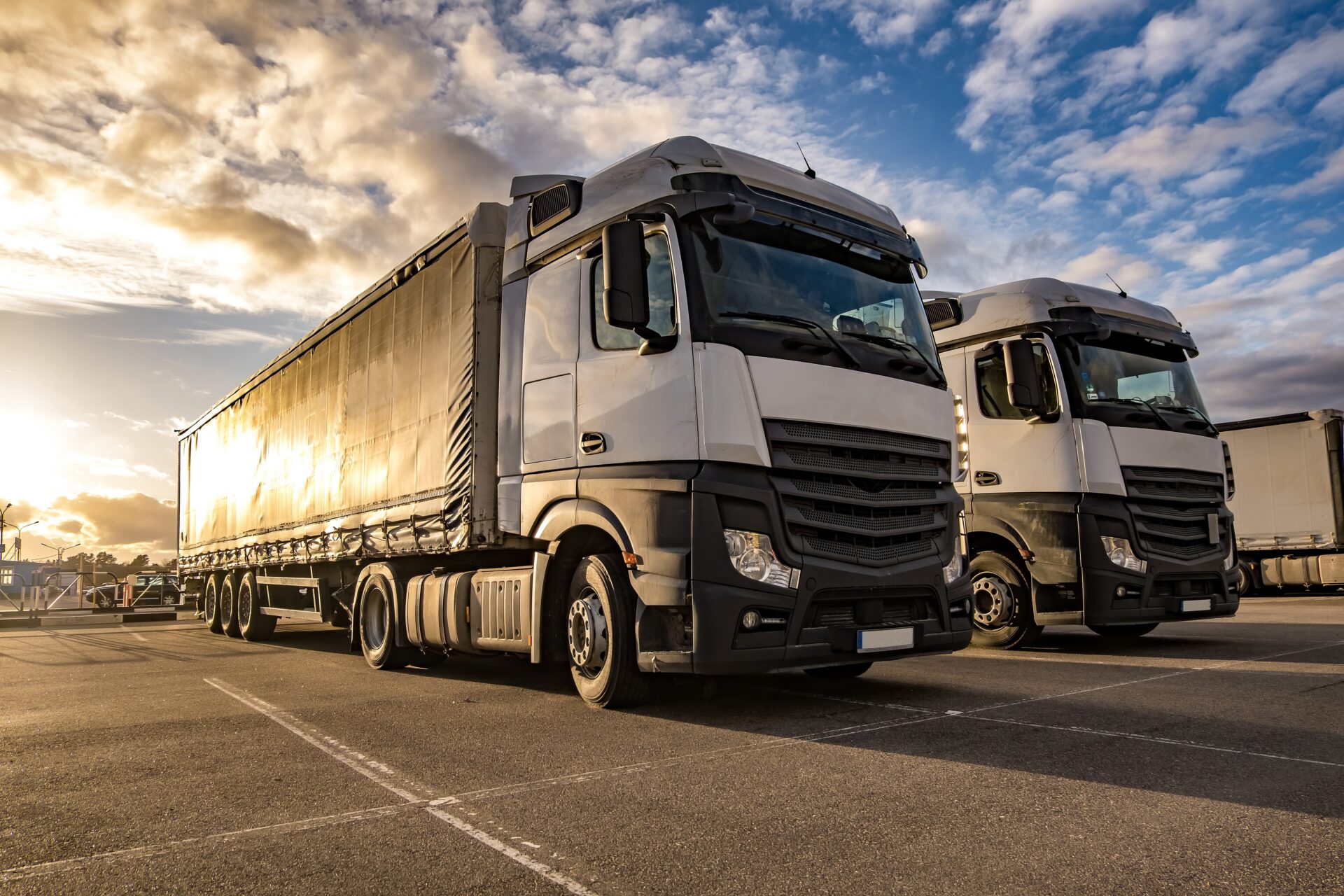
Poland offers a strong logistics foundation — ideal conditions for establishing and scaling a transport company.
Poland offers a favorable environment for establishing a transport company due to its strategic location in Central Europe, developed road infrastructure, and access to the European market. Whether you plan to operate locally or expand internationally, Poland provides a wide range of opportunities for logistics and transportation businesses.
The country’s well-organized road network, modern highways, and proximity to major European trade routes make it an ideal hub for efficient transport operations. In addition, Poland’s central position in Europe allows companies to reach neighboring countries quickly, reducing transit times and optimizing supply chains.
Poland also benefits from a highly developed multimodal transport system, including extensive rail connections, modern seaports on the Baltic Sea, and numerous airports, which together facilitate smooth cargo movement both domestically and across Europe. This strong infrastructure supports a variety of transport activities, from local deliveries to long-distance international freight, making it easier for companies to expand their services and compete in the European market.
The regulatory environment in Poland is transparent and business-friendly, with clear rules for establishing and running a transport company. Licensing procedures are well-defined, which helps entrepreneurs navigate the requirements efficiently. This clarity reduces administrative barriers and allows transport companies to focus on growth, customer service, and operational efficiency. Moreover, Poland’s membership in the European Union ensures that transport operators have access to a harmonized regulatory framework, enabling them to operate freely across EU member states while complying with consistent standards.
Poland’s market also offers significant potential for business growth. The country’s economy is dynamic and continuously expanding, creating increasing demand for logistics and transportation services. Companies entering the Polish market can benefit not only from domestic opportunities but also from the country’s role as a gateway to other European countries, providing access to both established and emerging markets. In addition, Poland’s skilled workforce, with expertise in logistics, transport management, and related fields, ensures that businesses can find the talent needed to support efficient operations and long-term development.
Before starting the registration process, an e-signature must be obtained. This is required to sign documents electronically in the Polish business system. This procedure is carried out entirely remotely, eliminating the need to send physical documents or travel to Poland.
Company registration is done via the S24 system, a fast-track online registration platform. The company must be listed in the National Court Register (KRS) or the Central Register (CEIDG).
The most advantageous form of business registration in Poland is a limited liability company (Spółka z ograniczoną odpowiedzialnością, or Sp. z o.o.).
Depending on the type of transport services offered, different licenses are required:
The most commonly obtained license is the International Goods Transport License
(EU Community License), which enables businesses to conduct transportation
operations across the European Economic Area (EEA).
Before applying, the company must have:
Application can be submitted online or by:
At least one employee must hold a certificate of professional competence. This can be obtained by taking a 10-day course (with a Polish language requirement) and passing an exam. Alternatively, a certified transport manager can be hired.
Drivers must meet the following conditions:
Transport companies must have liability insurance and, if applicable, a bank guarantee for financial security.
The application includes:
Documents to attach:
Fees for a NEW company, based on GITD tariff:
| Item | Up to 5 years | Up to 10 years |
|---|---|---|
| Permit to operate as carrier | 1000 PLN | 1000 PLN |
| EU Community Licence | 4000 PLN | 8000 PLN |
| Vehicle licence extract (per vehicle) | 440 PLN | 880 PLN |
Example:
1 vehicle, 5-year validity:
Total: 5,440 PLN
After approval, the company receives:
According to EU regulations, transport companies must have a physical office in Poland where business records and transport-related documents are stored. The company must also have at least one registered vehicle.
Regarding the operational base, the company must have a place where vehicles can be parked and maintained. Proof of having an operational base can be, for example, a property ownership document or a lease agreement.
The company owner and transport manager must have a clean criminal record and comply with all Polish and EU transport regulations.
The owner and transport manager of the company must uphold a good reputation to operate legally. This entails:
No convictions for serious offenses such as fraud, financial misconduct, or transport law violations.
No history of severe breaches of EU or Polish transport regulations, particularly concerning road safety, environmental policies, or unfair competition.
Applicants must submit official certificates from the National Criminal Register, affirming the absence of disqualifying offenses. Additionally, a sworn declaration confirming compliance with EU regulations must be provided.
Authorities regularly assess companies to ensure they maintain their good standing. Violations may lead to penalties or revocation of transport licenses.
Financial stability is a crucial requirement for transport companies in Poland. To ensure that a business can meet its financial obligations, it must provide proof of sufficient capital and reserves. The required financial capacity is determined based on the size of the fleet. For an EU transport license, the requirements are as follows:
These amounts must be verified through one of the following methods:
A transport company must appoint a transport manager responsible for ensuring legal compliance and overseeing operations. The manager must meet the following criteria:
Take advantage of Poland’s strategic location and thriving logistics market. Contact us now to simplify your licensing process and launch your transport company with ease!
It is a document confirming the qualifications and knowledge required to start and conduct business activity in the field of road transport. At least one of the natural persons managing road transport must hold a certificate of professional competence in order to obtain authorisation for domestic or international road transport.
Examinations take place in selected cities in Poland including Warsaw, Łódź, Katowice and Poznań, and are conducted by examination committees operating under the Motor Transport Institute. The Institute provides written notification of the date, location, and scope of the examination.
A person holding a graduate or postgraduate degree whose study programme covers all topics listed in Annex I to Regulation (EC) No 1071/2009 may be exempt from the written examination.
A person whose studies cover only some of the required subjects may be exempt from the relevant part of the written test.
A company wishing to operate as a professional road transport operator in Poland must obtain one of the following:
Required for commercial transport of goods within Poland using vehicles or vehicle combinations over 3.5 tonnes.
The domestic authorisation to pursue the occupation of road transport operator is the first and essential step for any entrepreneur planning to transport goods or passengers for profit within Poland. This document is issued by the competent district authority responsible for the company’s registered office.
The authorisation is required when transporting goods using vehicles with a permissible total weight above 3.5 tonnes.
Operations in the field of domestic transport of goods or passengers may be conducted only after meeting all formal requirements, including obtaining the appropriate authorisation.
The obligation to hold a licence applies only to entrepreneurs who actually perform transport activities. It does not apply to entities outsourcing transport to external companies nor to those transporting goods solely for their own internal needs.
Required for international transport of goods within the EU, using vehicles:
Both licences are issued by the Polish General Inspectorate of Road Transport (GITD) via the LR1 application form.
The EU community licence is a key document enabling commercial international transport of goods or passengers within the European Union and the European Economic Area. It is issued by the Chief Road Transport Inspector and allows the expansion of transport operations into international markets.
Prior possession of an EU community licence is not required for submitting an application for the occupation of road transport operator. Both applications may, however, be submitted simultaneously.
This type of licence is required for activities consisting of organising the transport of goods on behalf of clients without the need to possess own vehicles. The entrepreneur does not transport goods personally but acts as an intermediary by commissioning transport services to carriers.
The forwarding licence formally known as the licence for road transport operations in the field of intermediation allows professional planning and coordination of goods transport on behalf of clients. It is suitable for companies wishing to operate in the transport sector without investing in their own fleet.
The from for obtaining the licence is transparent but requires fulfilment of several formal conditions.
The company may conduct forwarding activities only if it meets the requirement of financial standing. The enterprise must have financial resources or assets worth 50000 EUR.
Data based on reports from the Chief Inspectorate of Road Transport (GITD), Transport & Logistics Poland (TLP) and sector analyses.
Overview of licence penetration and minimum financial standing required for road carriers in Poland (international transport, vehicles >3.5 t and 2.5–3.5 t).
Poland offers access to the European market, well-developed infrastructure, and competitive tax rates.
A company must be registered, have access to an operational base, provide a clean criminal record certificate, prove financial stability, and hold a professional competence certificate.
The duration of the licence is determined when you submit your application. A long-term transport licence costs approximately 8,000 PLN (up to 10 years for an EU Community Licence) or 1,000 PLN (Domestic Licence for a period of 30-50 years).
Drivers risk heavy financial penalties, which can reach up to 12,000 PLN if they operate without the appropriate licence while transporting people or goods within domestic routes.
The Chief Road Transport Inspector (GITD), located in Warsaw, is responsible for issuing transport licences. To obtain an EU Community Licence, an entrepreneur must hold authorisation to operate as a road transport operator. It is possible to submit the application for the authorisation at the same time as the application for the licence. In such cases, both documents are issued simultaneously by the same authority, the Chief Road Transport Inspector.
A business must demonstrate financial capacity, with €9,000 needed for the first vehicle and €5,000 for each additional (obtain an EU transport license).
Official statutory processing time: 1 month. In practice: 1-2 months depending on completeness of documents.
Foreign entrepreneurs can establish a limited liability company (Spółka z o.o.) or, under certain conditions, operate as a sole proprietor (JDG).
Leading platforms include Allegro, Ceneo, OLX, and Zalando, along with e-commerce solutions like PrestaShop, WooCommerce, Magento, and Shopify.
The most commonly used payment options in Poland are SWIFT, BLIK, Przelewy24, PayU, and PayPal.
Business owners need to register their company, choose a tax system, and integrate secure payment solutions.

We handle the entire Polish transport operator licensing process for a fixed fee, including:
Your application has been successfully sent!
We will contact you within a few business hours.
In case of urgent questions, you can contact us by phone or email: