
Gambling License
We actively support the growth of the gambling industry by securing licenses for a wide range of clients — from major software providers to individual companies launching their own projects.
Our legal team consists of highly qualified experts with deep experience in gaming regulation.
Partnering with us means guaranteed results and a fully legal start in your chosen jurisdiction.
Get a free consultation Get a free consultationWhat is an online gambling license?
An online gambling license is a legal permit from a government-approved authority that allows a company to offer gambling services like casinos, sports betting, or lotteries in specific regions or worldwide. It confirms that the operator meets standards of fairness, security, and financial responsibility.
To get licensed, a company must pass background checks, submit documents, and pay fees to show it complies with gambling laws. Licensed operators are subject to regular oversight and must follow rules on anti-fraud, AML policies, data protection, and responsible gambling. Holding a license proves a business is legitimate and helps build trust with players and partners.
Who Needs a Gambling License?
A license is necessary for any iGaming operator to operate legally and compliant. Types of businesses that need online gambling licenses are:
Businesses offering casino games like poker, roulette, slot machines, blackjack and baccarat online.
Companies accepting real money bets on sports, esports or other live events.
Companies running online lotteries or bingo games to online players.
Businesses creating gaming software platforms and tools for gambling websites.
Financial institutions and payment processors handling transactions related to online gambling.
Main Benefits of Getting an Online Gambling License
Licenses show regulatory compliance and increase confidence among players and partners.
Good tax policies in licensing jurisdictions to optimize your financials.
Licenses often allows access to multiple markets, broadening your customer base.
Comprehensive licensing reduces legal risks and operational disruptions.
Easier collaboration and better negotiation terms with gaming software developers, financial service providers and payment processors.
Gambling License from Adam Smith
- Read more
UK
Our team of experienced licensing experts at Adam Smith will support your gambling business in the UK. We handle everything from the licensing application process, regulatory compliance, document preparation and procedures to ensure efficiency and fast track approval.
Timeframe: 16–20 weeks
Price: from 7500 EUR - Read more
Anjouan
Anjouan offers a fast, affordable, and flexible licensing solution for online gambling operators. With minimal setup costs, no local office requirements, and coverage for a wide range of gaming activities, it’s an ideal choice for startups and established businesses alike.
Timeframe: 2–4 weeks
Price: from 29 900 EUR - Read more
Kahnawake
For over 25 years, Kahnawake has been a pioneer jurisdiction allowing legal and regulated online gaming businesses. Benefit from a globally recognized license with straightforward regulations, zero taxation, and quick set-up procedures. Our professional team is here to navigate you effortlessly through licensing in Kahnawake.
Timeframe: 8–10 weeks
Price: from 25 500 USD - Read more
Estonia
Estonia is a modern European jurisdiction that gives operators the right to offer gambling services legally. Getting an Estonian Gambling License allows businesses to enter one of the fastest growing gambling markets in Europe and operate globally in a well regulated environment. Licensing includes responsible gambling, AML and thorough verification process overseen by Estonian Tax and Customs Board (EMTA).
Timeframe: 4 months
Price: from 6 200 EUR - Read more
Curacao
Start your online gambling venture with ease by obtaining a Curacao gambling license. Benefit from quick processing, affordable rates, low taxes, and other advantages that make Curacao the ideal destination for both startups and growing businesses
Timeframe: 6 weeks
Price: from 21 000 EUR - Read more
Malta
Malta is one of the world’s top destinations to get a solid and respected gaming licence. Issued by the Malta Gaming Authority (MGA), this licence covers a wide range of online gambling activities including online casinos, sports betting, lotteries, poker and more. Getting a Malta gambling license opens up the EU market and gets you a sense of nostalgia and enthusiasm.
Timeframe: 4–6 months
Price: from 35 000 EUR - Read more
Isle of Man
A global pioneer in the online gambling industry, the Isle of Man offers one of the world’s fastest licensing processes within a stable regulatory framework, practical taxation benefits, advanced infrastructure and potential to enter international markets.
Timeframe: 10–12 weeks
Price: from 5 000 GBP - Read more
Costa Rica
Costa Rica is a popular offshore jurisdiction for gambling businesses due to its fast setup, low costs, and minimal regulatory restrictions. It does not issue a formal gambling license but allows companies to operate legally with a business license and proper corporate structure.
Timeframe: 6-8 weeks
Price: from 6 500 USD
How to Get Online Gambling License
Step-by-step Guidance for Securing Your Gambling License
Starting an online gambling business can be lucrative due to the industry growth. Getting your license is the first step to enter this market, to ensure your business is fully compliant with the laws. Here’s our proven roadmap to get your license:
Choosing the jurisdiction where you get your license is crucial. Popular jurisdictions like Curacao, Malta, Estonia and others have different costs, regulations and tax benefits. Research thoroughly or consult our experts to choose a jurisdiction that fits your goals and budget.
Register your business according to your chosen jurisdiction’s requirements. This includes incorporation, trademark registration, local office or server setup and technological readiness.
Gather extensive documentation including business plan, proof of funds, founders’ background checks, employee profiles, proposed gambling activities, platform details. Regulators will scrutinize everything – make sure to be clear, compliant and diligent from day one.
Implement robust AML and Know-Your-Customer (KYC) procedures to combat money laundering and comply with global standards. Your operational practices must include responsible gambling guidelines, AML/KYC policy documents and technical audit measures.
Submit your application to the regulatory authority with all documentation. The authority will review your application and may request additional information during the process.
After successful review the authority grants your gambling license and you can legally enter the online gambling industry. Once licensed you can launch your platform, establish partnerships and accept customer deposits.
With Adam Smith’s support we simplify this process. We help with document preparation, submission management, legal advice and get your online gambling license efficiently.
Meet Our Team of Experts
An Adam Smith our team of experts know international regulatory environments and global financial compliance. Our consultants and legal professionals will guide your online gambling license application smoothly and ensure your business remains compliant long term.
Comprehensive corporate law services and FinTech solutions in one place
We provide company registration services, cryptocurrency and financial licensing services, accounting support services, business consulting, and we also offer solutions for establishing classic and cryptocurrency funds.
We are a team of professional consultants, lawyers and financiers specialising in corporate law. Our aim is to help entrepreneurs develop FinTech and cryptocurrency businesses.
Our employees are always aware of the latest changes in the financial and corporate legislation.
Since 2017, we have been guiding businesses in obtaining cryptocurrency licenses, ensuring smooth, compliant setups
From innovative startups to established enterprises, we have helped secure ove 1000 crypto licenses worldwide
We provide crypto licensing with local legal offices and in-house lawyers in every jurisdiction we operate.
Ready to Launch Your Licensed Gambling Business?
Take the first step to success in the online gambling industry. With established expertise and full support Adam Smith will get you your online gambling license fast and smoothly. Schedule your consultation with one of our licensing experts to see how quickly your online gambling platform can be operational.
Request Consultation Request ConsultationFAQ About Gaming Licenses
An online gambling license is official legal authorization issued by regulatory authorities to operate and manage gambling platforms legally and transparently.
You need a license to operate a gambling business legally, to be compliant, to have customer trust, banking, marketing advantages and security against liabilities.
Curacao is one of the most cost effective with low initial application fee, attractive taxation and favorable legislation.
Time varies: 4-6 weeks in Curacao, 2-4 months in Estonia, 3-6 months in Malta depending on jurisdiction.
Basic costs include jurisdiction licensing fees, legal support, infrastructure setup, due diligence services, audits and ongoing compliance expenses varying by jurisdiction.
Operating without a license means legal sanctions, website shutdowns, loss of banking access, severe financial penalties, imprisonment risks and damaged reputation.
Some jurisdictions like Estonia and Curacao have one license for multiple gambling activities while Malta and Isle of Man require separate licenses or individual extensions.
Estonia and Malta are both great gateways to European Union markets with regulated access and operational transparency for gaming operators.
Adam Smith provides licensing consultation, documentation assistance, regulatory reviews, compliance management, jurisdiction selection advice and full end-to-end license acquisition support.
Typically gambling licenses are not transferable between parties or entities and a new application is required when business ownership or control changes.
Choosing the right business structure in Poland can be challenging due to the wide variety of legal forms available – our law firm, with years…
With so many countries to choose from to set up your company, it can be tough to know where you should settle. Each country has…
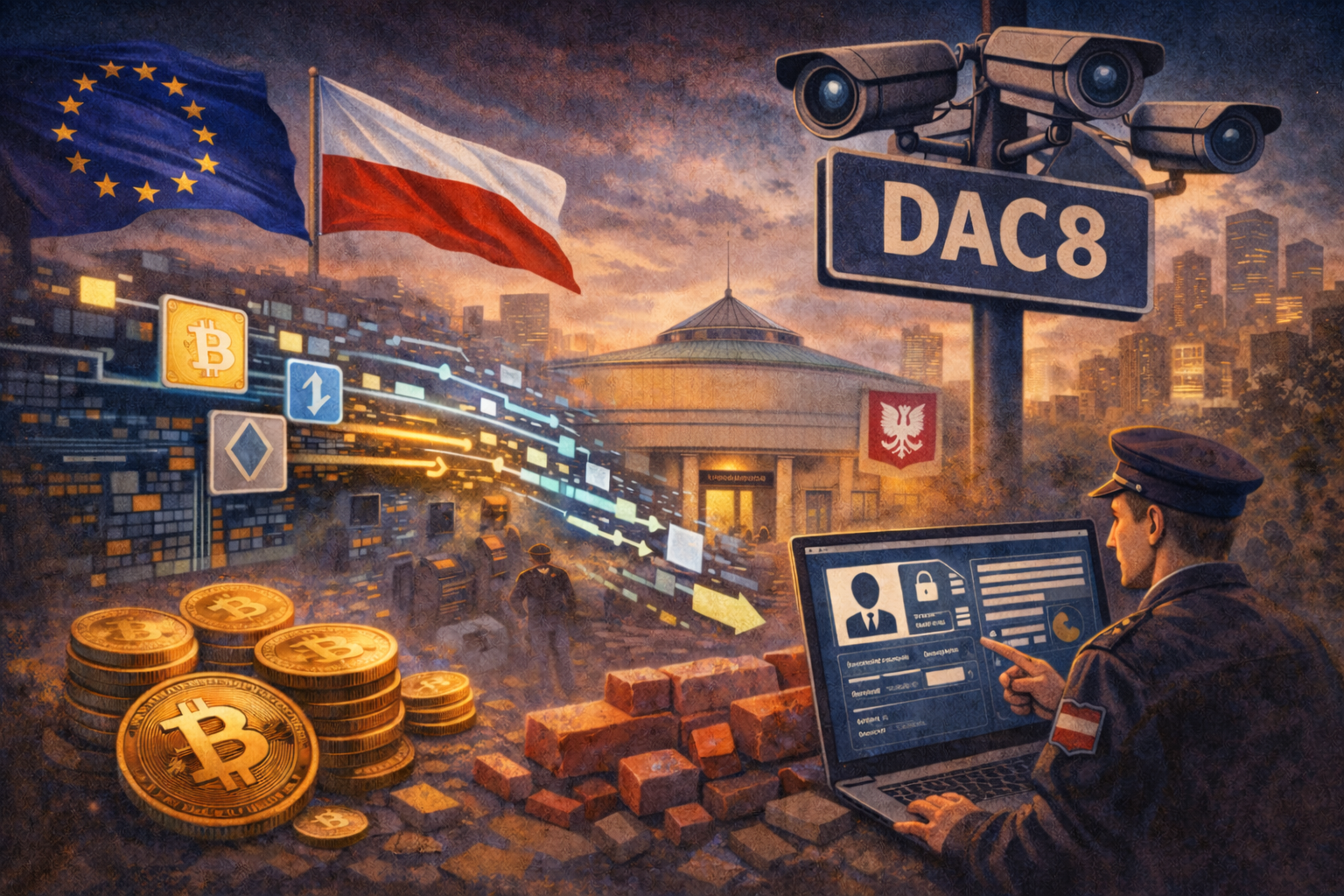
Poland is moving toward full crypto transparency under DAC8. Exchanges will automatically report user activity to tax authorities, making compliance and tax residency details more important than ever.
End of Crypto Anonymity in Poland: DAC8
The Polish government has effectively confirmed the end of crypto anonymity in Poland. A draft bill adopted in December, implementing the EU DAC8 directive, will allow tax authorities to access crypto transaction data in a manner comparable to bank account reporting.

This article is brought to you by the team at AdamSmith. AdamSmith is a team that helps crypto companies establish and maintain legal structures in 20+ countries.




Please note: none of this information should be considered as legal, tax, or investment advice. While we’ve done our best to make sure this information is accurate at the time of publishing, laws and practices may change. For help with the legal structuring of your project, speak to us.
On 17 December 2025, the Council of Ministers adopted a draft amendment to the Act on the Exchange of Tax Information with Other Countries. Despite its technical title, this draft represents one of the most significant regulatory developments for the Polish crypto market to date.
The Polish government has formally submitted the DAC8 implementing bill to the Sejm (the lower house of Parliament) on 4th January 2026. The Sejm has subsequently referred the draft legislation to the relevant parliamentary committee for further work.
Following the completion of committee proceedings, the bill will be put to a plenary vote. Adoption is expected to take place in the first half of 2026.
The new rules affect holders of Bitcoin, Ethereum, stablecoins, NFTs, and other crypto-assets who use exchanges or other intermediaries.
But It should be emphasized that EU law is a matter of dispute in Poland -the President has vetoed both the Crypto-Assets Market Act and the bill implementing the DSA, as discussed in more detail later in the article.
What Is DAC8?
The draft implements Council Directive (EU) 2023/2226 (DAC8) into Polish law. This is the eighth amendment to the EU directive on administrative cooperation in taxation. Its primary objective is to extend the system of automatic exchange of tax information to crypto-assets.
For many years, traditional bank accounts have been subject to full transparency under the Common Reporting Standard (CRS), while crypto-assets remained largely outside formal reporting frameworks. As noted in the explanatory memorandum to the draft, most crypto-assets were not reportable under existing EU regulations, and many crypto service providers did not fall within the definition of financial institutions.
As a result, crypto-assets could be transferred and stored without the involvement of traditional financial intermediaries and without centralized oversight from a tax reporting perspective. This regulatory asymmetry is now being addressed.
DAC8 implements the OECD Crypto-Asset Reporting Framework (CARF), aligning crypto reporting standards with those already applicable in traditional finance.
Who Will Be Required to Report?
The draft introduces the concept of a “reporting crypto-asset service provider”, which includes:
- Crypto-asset service providers authorized under MiCA, including major EU-licensed exchanges.
- Crypto-asset operators, a newly defined category covering entities not directly regulated under MiCA but providing comparable services, such as platforms operating under reverse solicitation models or certain NFT platforms.
- Providers of staking and crypto lending services, with reporting obligations explicitly extended to these activities.
- Operators of crypto ATMs and selected DeFi platforms, where they exercise effective control over transactions.
Which Authority Will Receive the Data?
The draft establishes nexus rules determining the jurisdiction responsible for reporting. For Polish tax residents, this means that transaction data will be reported to the Head of the National Tax Administration (Krajowa Administracja Skarbowa) via automatic exchange mechanisms, even where the service provider is established in another EU Member State.
Scope of Reported Information
User Identification Data
Reporting will include the following identification data of users:
- Full name
- Residential address
- Country or countries of tax residence
- Tax identification numbers (in Poland: PESEL or NIP)
- Date and place of birth
Transaction Data (Per Crypto-Asset)
Transaction data will be reported separately for each crypto-asset and will include:
- Total gross value of purchases made with fiat currencies
- Total gross value of sales into fiat currencies
- Market value of crypto-to-crypto exchanges
- Value of retail payment transactions settled in crypto
- Total value and number of incoming and outgoing transfers
- Number of units and number of transactions in each category
Transfers of crypto-assets from exchanges to external addresses, including private cold wallets, are explicitly covered. Such transfers will be reported as movements to addresses for which there is no information linking them to an identified natural person or business entity.
As a result, tax authorities will have visibility over the volume of crypto-assets withdrawn from the regulated ecosystem. Any future monetization of such assets may require substantiation of acquisition cost and timing of income realization.
Calculator: How Much Will a CASP License (MiCA) Cost for a New Company?
Mandatory Tax Residency Declaration
Under the DAC8 implementing legislation, access to crypto-asset services will be conditional upon the submission of a tax residency declaration. This requirement applies to both new and existing users.
The declaration must include:
- Country or countries of tax residence
- Tax identification number for each such country
- Personal data submitted under criminal liability for false statements
Failure to submit the declaration will result in restrictions on the account. After 60 days from the initial request, the reporting crypto-asset service provider will be required to block the user from performing reportable transactions, including purchases, sales, and withdrawals.
Deadlines for Existing Users
Service providers will have until 31 October 2026 to obtain the required declarations, with two formal requests to be issued.
Accounts for which declarations are not provided by the end of 2026 will be blocked as of 1 January 2027.
Retail Payments in Crypto
The draft introduces the concept of a “reportable retail payment transaction”, defined as a crypto-asset transfer in exchange for goods or services exceeding USD 50,000 in value.
Transactions such as the purchase of vehicles, real estate, or other high-value assets using crypto through regulated intermediaries will be reportable, with identification of both the buyer and the seller.
Exclusions From Reporting
The following categories are excluded from DAC8 reporting obligations:
- Central bank digital currencies (CBDCs)
- Electronic money within the meaning of applicable regulations
- Closed-loop crypto-assets, including certain utility tokens, loyalty points, and in-game assets that cannot be used outside a limited ecosystem
The burden of proof rests with the service provider. In cases of uncertainty, a crypto-asset is treated as reportable.
MiCA Across EU Countries (Mini-Hub)


Sanctions for Non-Compliance
The draft establishes both administrative and fiscal criminal sanctions for non-compliance by service providers. These include:
- Financial penalties for failure to report
- Penalties for failure to apply due diligence procedures
- Sanctions for failure to register as required
- Fiscal criminal liability for individuals acting on behalf of non-compliant entities
The DAC8 implementation marks a fundamental shift in the treatment of crypto-assets in Poland.Crypto transactions conducted through regulated intermediaries will now be subject to transparency standards comparable to those applicable to bank accounts. For Polish tax residents, this effectively brings an end to practical crypto anonymity and significantly increases the importance of accurate tax reporting and record-keeping.
The EU law dispute in Poland – what’s next?
On this occasion, it is worth noting that on 9 January 2026 the President of Poland, Karol Nawrocki, vetoed the bill introducing the Digital Services Act into the Polish legal system. The aim of the bill was to increase the protection of internet users against illegal content and to introduce clear appeal procedures against platform decisions.
The President stated that, in his view, this was a bad law which does not directly implement EU law and, moreover, expands upon it unnecessarily. As he said:
“The act implementing the so-called DSA – the Digital Services Act, the EU regulation on digital services – was, in principle, supposed to protect citizens, especially children. It is true that virtual reality today brings many threats. This is an extremely important matter, requiring prudent, effective, and wise regulation.
And it is precisely for this reason that it should not have been destroyed by poor legislative insertions. Once again, provisions that are indefensible and simply harmful were attached to good solutions.
(…)
I want this to be stated clearly: a situation in which a government-subordinate official decides what is allowed on the Internet resembles the construct of the Ministry of Truth from Orwell’s novel 1984. The author wrote about a mechanism of power that first takes control over language, then over information, and finally over the thinking of citizens.
If the authorities decide what is ‘truth,’ what is ‘disinformation,’ who may speak and who may not, freedom disappears step by step – under the seemingly noble slogans of security, the common good, or the protection of the weakest.
The most effective way to take away freedom is not to ban speech, but to impose the only permissible version of reality. Orwell’s Ministry of Truth is a warning symbol, an alarm – against the moment when the state begins to tell citizens not only what they are allowed to do, but also what they are allowed to say and think.
That is why I say: veto. However, I would like this to be treated as an appeal: let us fix this. Within a month we can prepare an honest draft. Within two months we can have an act that protects children and respects the Constitution. I invite the Ministry of Digital Affairs and the organizations that have approached the President on this matter to jointly prepare a good bill. Freedom of speech must be protected by the courts – quickly, effectively, and independently. It is worth correcting this, it is worth doing it properly. Let us not waste time; also for the sake of the youngest, let us build a state of freedom, not a state of censorship.
(…)
I will sign good laws. I will veto bad ones. And I will always stand on the side of Polish women and men.”
It is also worth paying attention, in this context, to the bill on the crypto-assets market, which likewise remains in limbo.
If MiCA Isn’t the Right Fit: Explore Other Jurisdictions
 Crypto License in Montana from 1 500 USD • 1 - 6 weeks
 MSB License in Canada from 12 500 USD • 5–7 months
 Crypto License in Panama from 4 500 EUR • from 2 weeks
 BVI Crypto License from 40 000 USD • from 4 months Crypto License in SVG from 2 900 EUR • 7 business days
 Seychelles Crypto License (VASP) from 8 000 EUR • from 5 months
At present, the crypto bill has “left” the Senate, where an amendment worsening it was added, increasing the fee for token issuers. The Sejm may now reject or approve it. The document will then land on the President’s desk (rejection of the bill by the lower house does not seem realistic), where it will be vetoed.
As a result, a scenario of an increasing legislative deadlock is becoming more and more likely: the government has enough senators and MPs to pass its bill, but is subsequently unable to override the President’s veto, as a three-fifths majority in the Sejm is required.
It is very likely that all three laws implementing EU law in Poland-the Crypto-Assets Market Act, the DSA, and DAC8-will not come into force.


